The club-section system
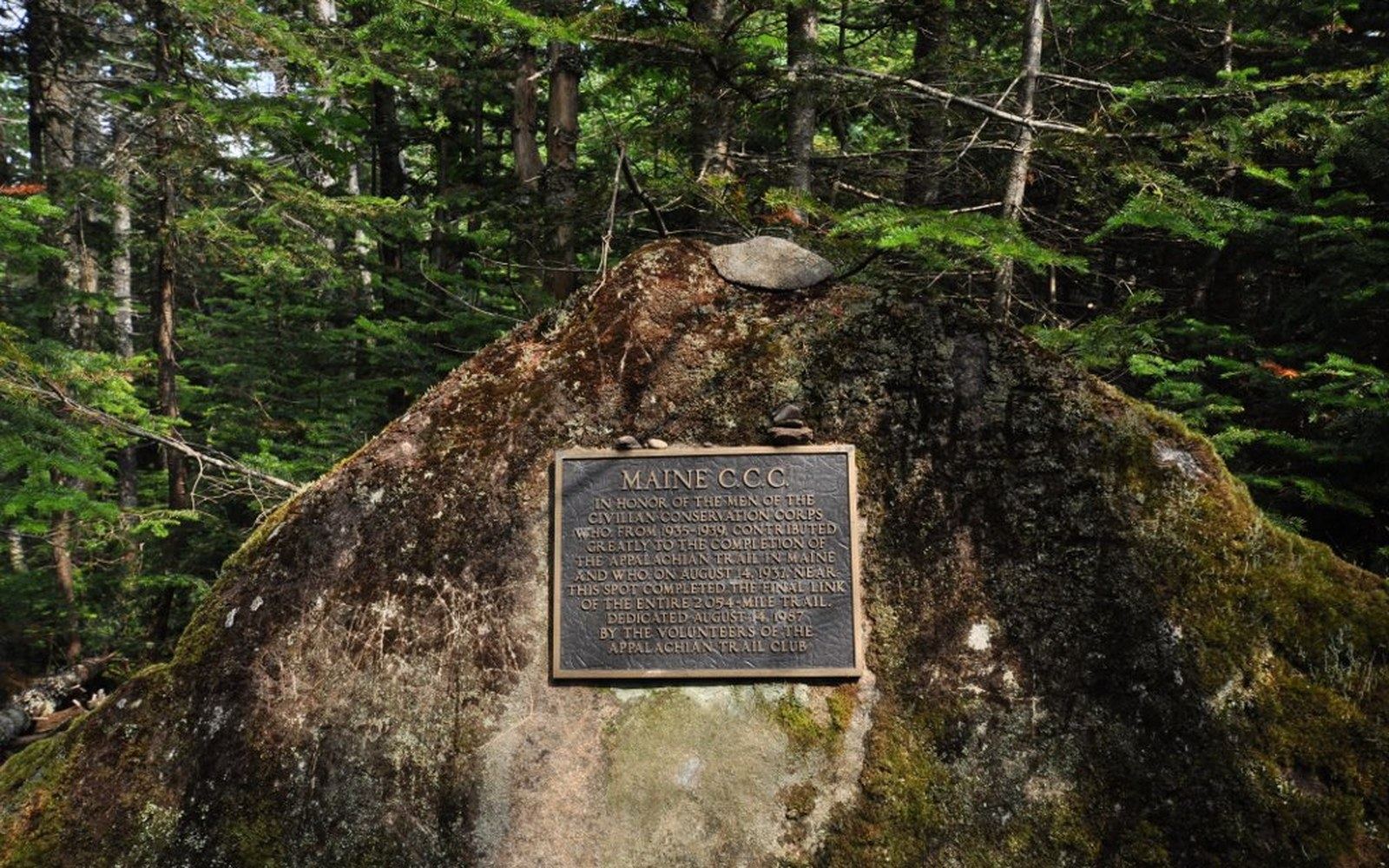
The Appalachian Trail offers the clearest illustration of how long-distance trails actually function in practice. The Appalachian Trail Conservancy does not maintain the trail itself — it coordinates roughly thirty affiliated trail clubs, each assigned a specific section of the route. The Potomac Appalachian Trail Club holds several hundred miles; smaller clubs may hold thirty. What a walker experiences underfoot in any given stretch reflects the resources, energy and institutional memory of that club, not some uniform national standard.
The Pacific Crest Trail works similarly. The Pacific Crest Trail Association organises volunteer crews and coordinates with the US Forest Service and National Park Service, but the physical work — clearing blowdown, resetting tread, installing drainage — is done overwhelmingly by volunteers in weekend and week-long stints. Condition varies by section because volunteer capacity varies by section.
This structure is older than most walkers assume. When Myron Avery was systematically measuring and mapping the Appalachian Trail in the 1930s, he was already relying on a patchwork of clubs whose boundaries roughly followed their membership's weekend driving range from population centres. The geography of club territories has always been social as much as spatial.
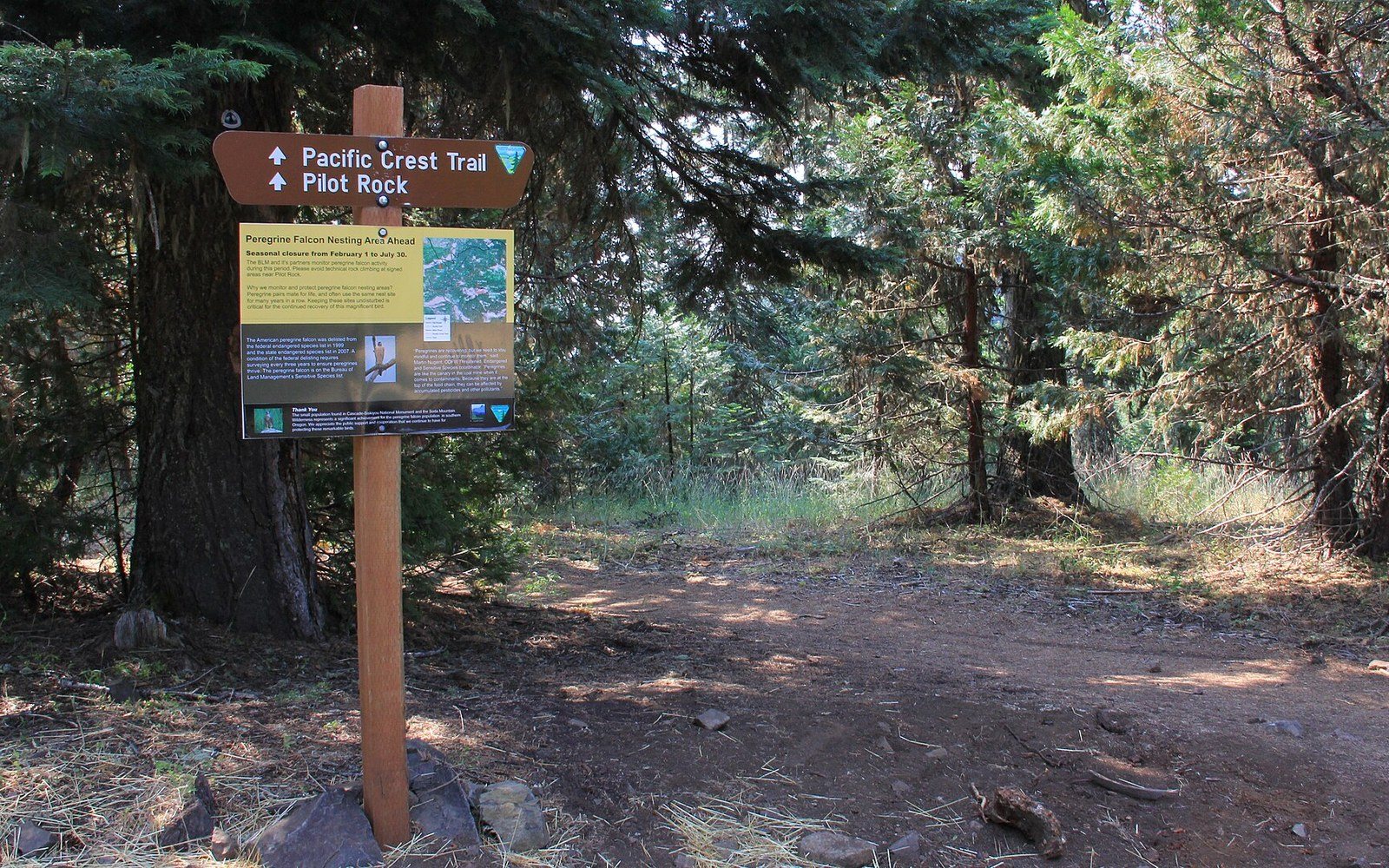
The Pacific Crest Trail in southern Oregon. Discussed in A path is dug, not worn.
Photo: The Pacific Crest Trail (PCT) in southern Oregon · Wikimedia Commons
What volunteers actually do
The work is unglamorous. A Saturday crew might clear a few hundred metres of blowdown after a storm, reset a water bar that has silted up and failed, or recut tread that has begun to widen as walkers dodge a muddy section. On exposed ridgelines, where cairns are the primary marker, crews reset stones displaced by frost heave or careless feet. Below the treeline, they repaint blazes on a cycle measured in years rather than decades — paint fades, trees grow, and a blaze buried in bark becomes invisible.
The variation this produces is structural, not accidental. A club with a stable membership, experienced crew leaders and good relations with land managers will maintain tighter tread to a more consistent standard than a club struggling to recruit. Reported completion rates for long trails track with many variables, but chronic poor condition on specific sections — muddy, overgrown, or poorly signed — is a documented factor in early exits.
None of this is a criticism of volunteerism; it is simply what the system is. Long trails exist at this scale because unpaid labour makes them economically possible. The trade is that the trail is only as good as the people who turn up, and that has always been unevenly distributed.
How the system is organised
- Appalachian Trail Conservancy
- the coordinating body; does not directly maintain tread
- Trail club
- a member organisation assigned a specific section of route
- Crew leader
- experienced volunteer who directs a maintenance day
- Water bar
- a drainage feature that silts up and must be periodically reset
- Blaze cycle
- the interval at which painted trail markers are refreshed
The Appalachian Trail Conservancy does not maintain the trail itself — it coordinates roughly thirty affiliated trail clubs, each assigned a specific section of the route.
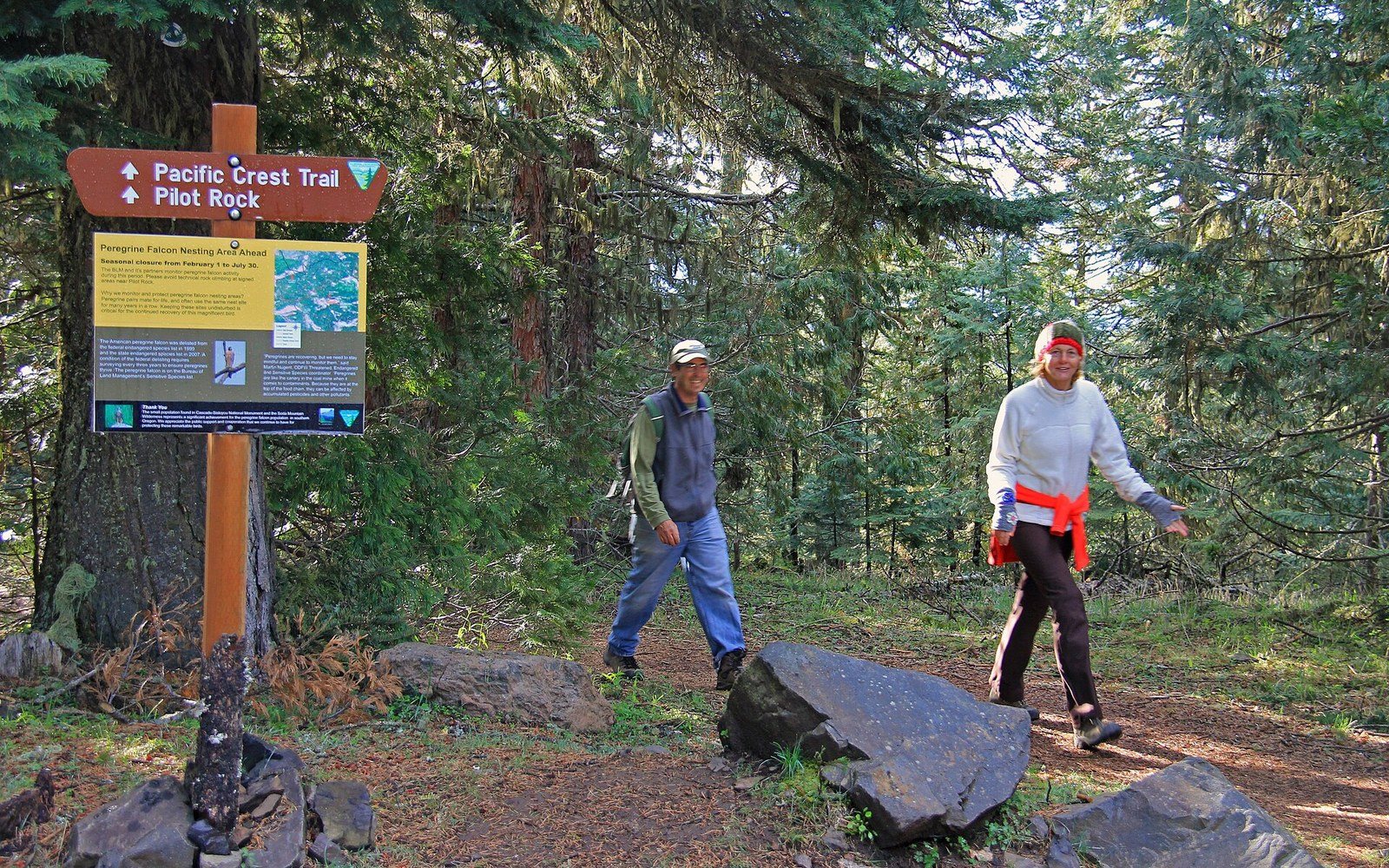
A Bureau of Land Management sign on the Pacific Crest Trail, Oregon. Discussed in Every trail problem is a water problem.
Photo: BLM and the Pacific Crest Trail Oregon · Wikimedia Commons
Chronology
- 1930sMyron Avery maps the AT using a club-section structure that still broadly holds
- Presentroughly thirty clubs maintain the Appalachian Trail under ATC coordination
A cut trail bench on a steep slope.
Photo: Alexey Demidov / Pexels
More in The path as a built object