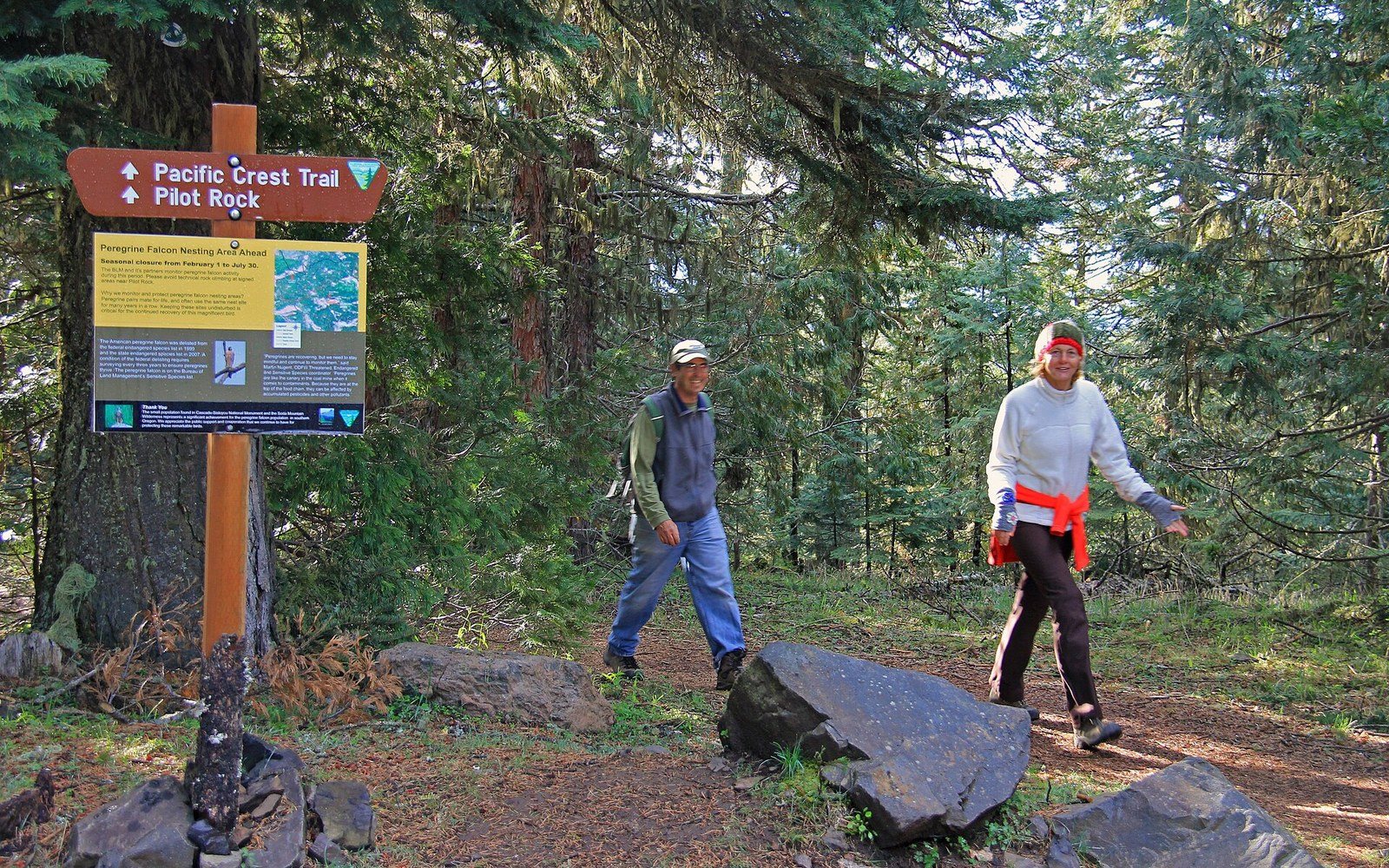
The real agent of destruction
A path that receives ten thousand boots a week will compact and widen, but it will not wash away. Add a culvert in the wrong place, a camber that sheds rain onto the tread rather than off it, or a section that runs straight down a slope instead of across it, and a single hard storm can undo a season of maintenance work. The fundamental insight behind modern trail engineering is straightforward: drainage is not a finishing detail, it is the design.
Walking compacts soil and strips vegetation, which reduces the ground's ability to absorb rainfall. After that, every raindrop that hits the tread becomes surface runoff, and surface runoff is what erodes. The sequence is well documented — compaction, then sheeting water, then rilling, then a gully that widens faster than any crew can fill it. Stop the water moving along the tread, and the erosion cycle breaks before it starts.
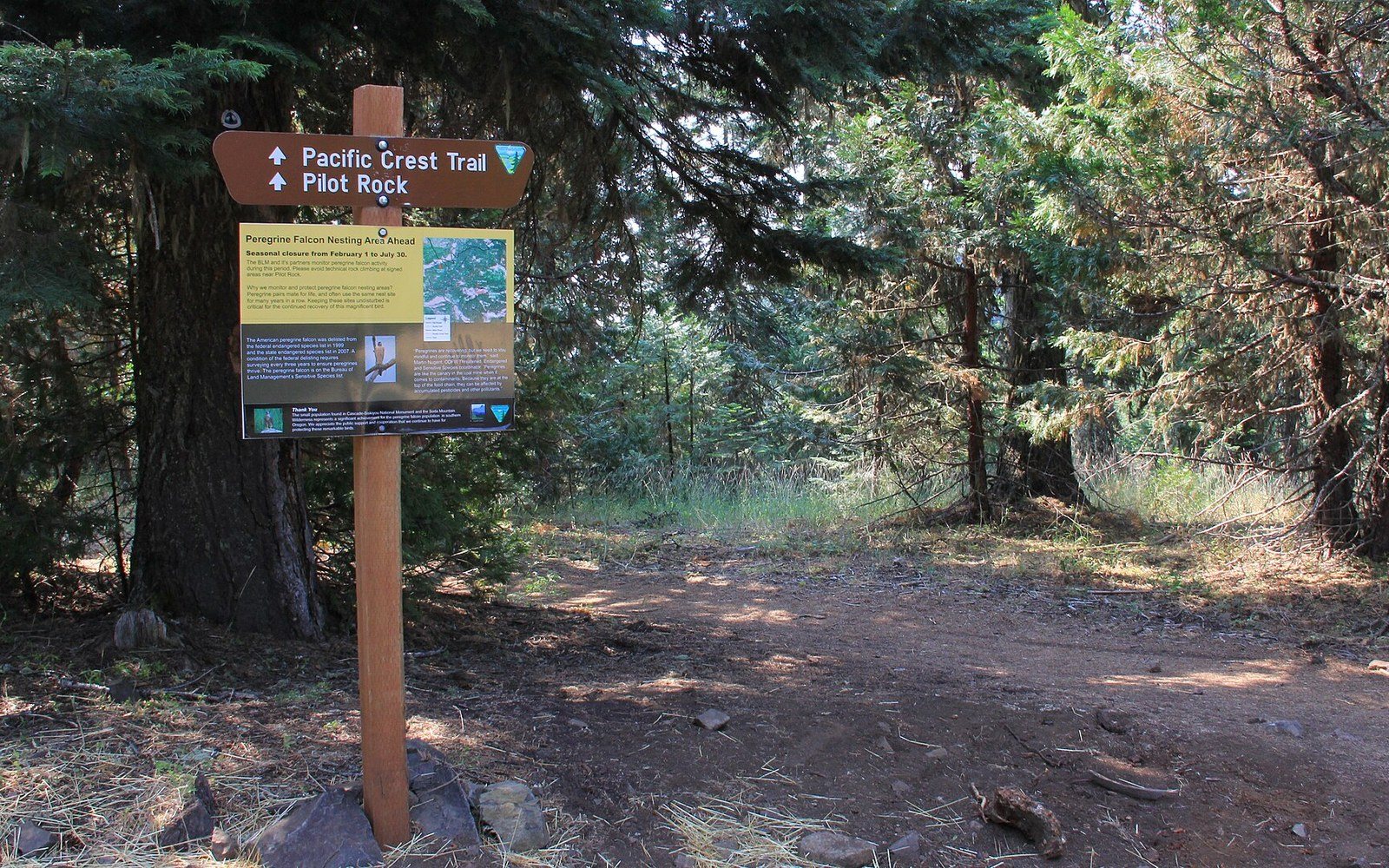
The Pacific Crest Trail in southern Oregon. Discussed in A path is dug, not worn.
Photo: The Pacific Crest Trail (PCT) in southern Oregon · Wikimedia Commons
The tools trail crews actually use
Three structures do most of the work, and each operates on the same principle: intercept running water and redirect it off the trail before it accelerates.
A water bar is the most common intervention. It is a channel — sometimes a timber or rock beam embedded diagonally across the tread, sometimes a simple trench — that catches water sheeting down the slope and throws it into the verge before it can travel further. The Appalachian Trail Conservancy's volunteer maintenance guidelines describe water bars as the first tool a new crew member learns to cut, and the one they will build most often. Spacing depends on slope: steeper grade means shorter intervals.
Drainage dips, also called grade dips or rolling dips, are a more permanent solution favoured on routes with significant machinery access or heavy volunteer programmes. Rather than intercepting water with a barrier, a drainage dip reshapes the tread surface itself — scooping out a low point that funnels water sideways and out before it continues downhill. Because they are cut into the earth rather than laid on top of it, drainage dips cannot be lifted by frost or rot like a timber water bar, and sustainable trail construction manuals from the US Forest Service consistently list them as the preferred drainage feature wherever grade allows.
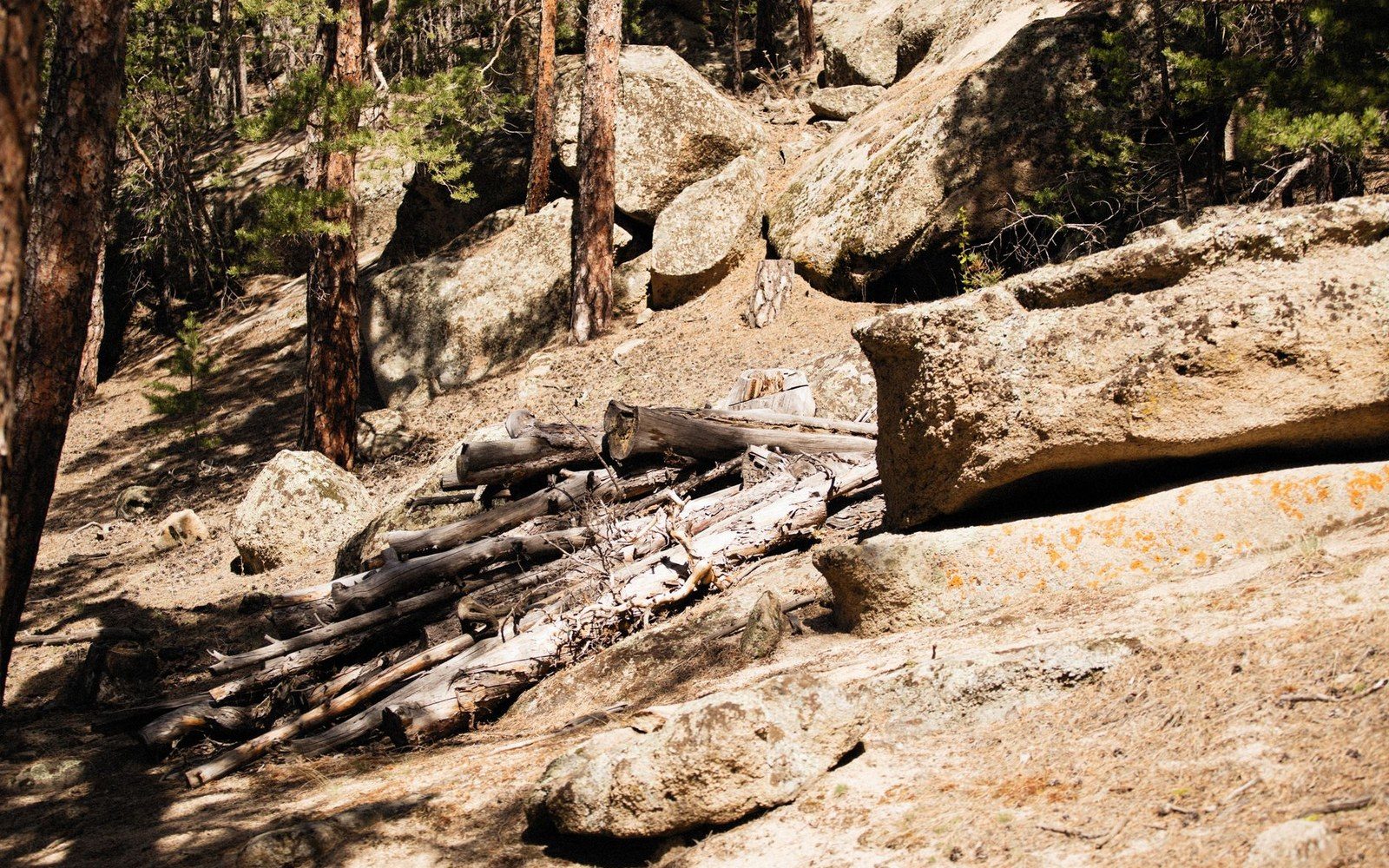
A cut trail bench on a steep slope.
Photo: Alexey Demidov / Pexels
Turnpiking addresses a different problem: a tread sitting in a depression with no way for water to leave. The technique raises the tread above the surrounding ground on a built-up fill of rock or compacted aggregate, outsloped — tilted slightly off the high side — so that water arriving from uphill crosses the tread surface and drains away rather than pooling. Turnpike construction is labour-intensive and expensive in remote terrain, which is why it tends to appear on heavily used corridors where the traffic load justifies the investment.
Outslope underpins all three approaches. A properly built tread is not flat; it tilts two or three degrees toward the downhill side. That angle is enough to keep water moving laterally across the path rather than longitudinally down it. Lose the outslope through compaction or poor construction, and no water bar in the world will fully compensate.
Chronology of the technology
- Water barsearliest documented use in eastern US trail building; standard practice by mid-20th century
- Drainage dips / rolling dipsadopted widely as a preferred alternative from the late 20th century onward, when machinery access improved
- Turnpikinghistorical technique (the name derives from road-building) revived and formalised for trail use across the 20th century
Why this matters for history
The shift from walk-worn paths to engineered tread is visible in the records of every major long trail. Early sections of the Appalachian Trail, routed in the 1920s and 1930s, frequently ran straight up and over ridgelines — efficient for travel, disastrous for drainage. Decades of rerouting since then have moved significant stretches onto better-graded alignments, often following contours rather than crests. The Appalachian Trail Conservancy's trail management guidelines codify these principles explicitly, treating drainage as the primary test of whether a section is well built. What looks like a smooth path is, underneath, a series of decisions about where water is going to go.
Turnpike construction is labour-intensive and expensive in remote terrain, which is why it tends to appear on heavily used corridors where the traffic load justifies the investment.
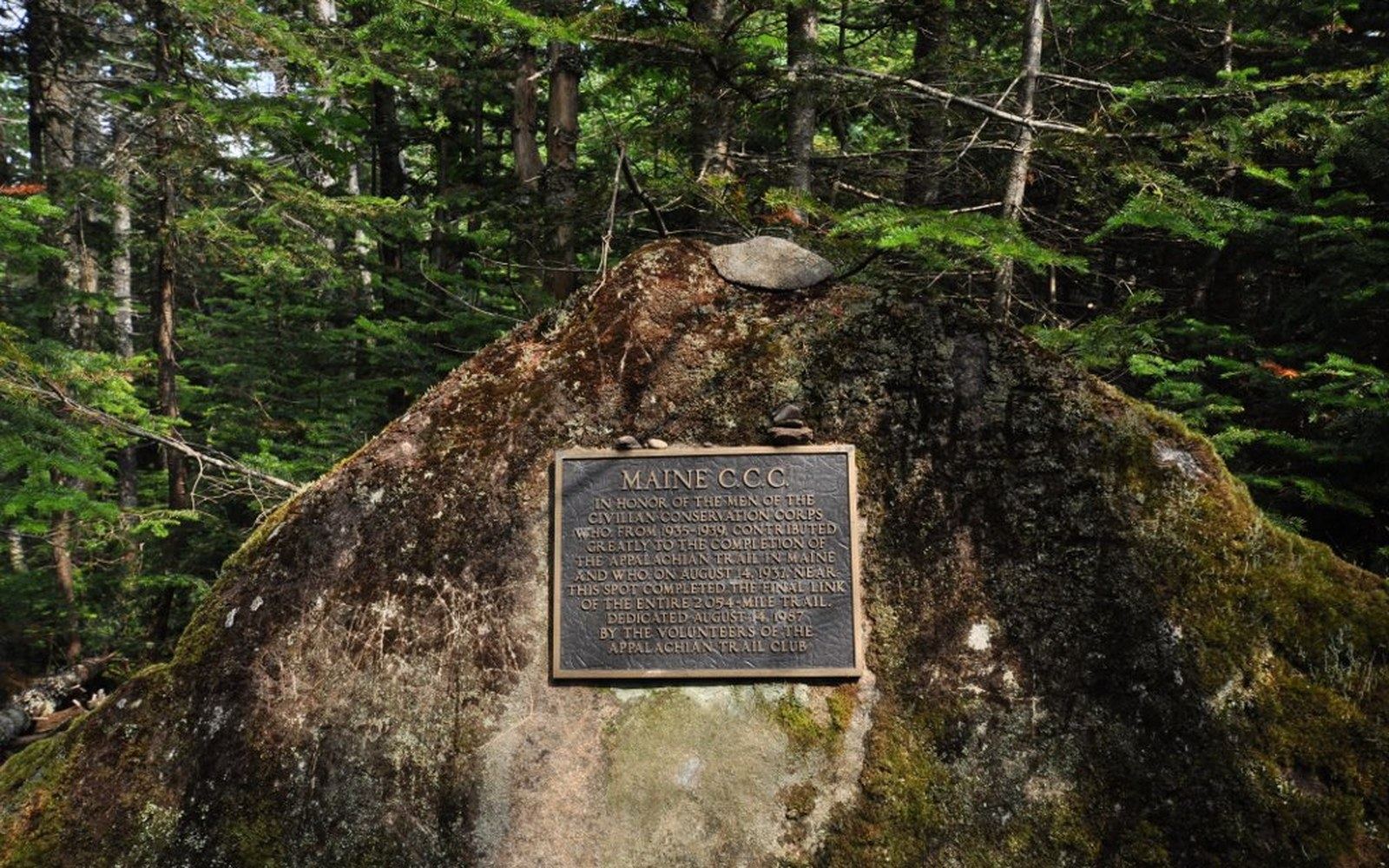
The Maine C.C.C. marker at the point where the final link of the Appalachian Trail was closed in 1937. Discussed in Volunteers hold most of it together.
Photo: AppalachianTrailInMaineCompletionMarker · Wikimedia Commons
More in The path as a built object