The Archaeology of a Heavy Pack
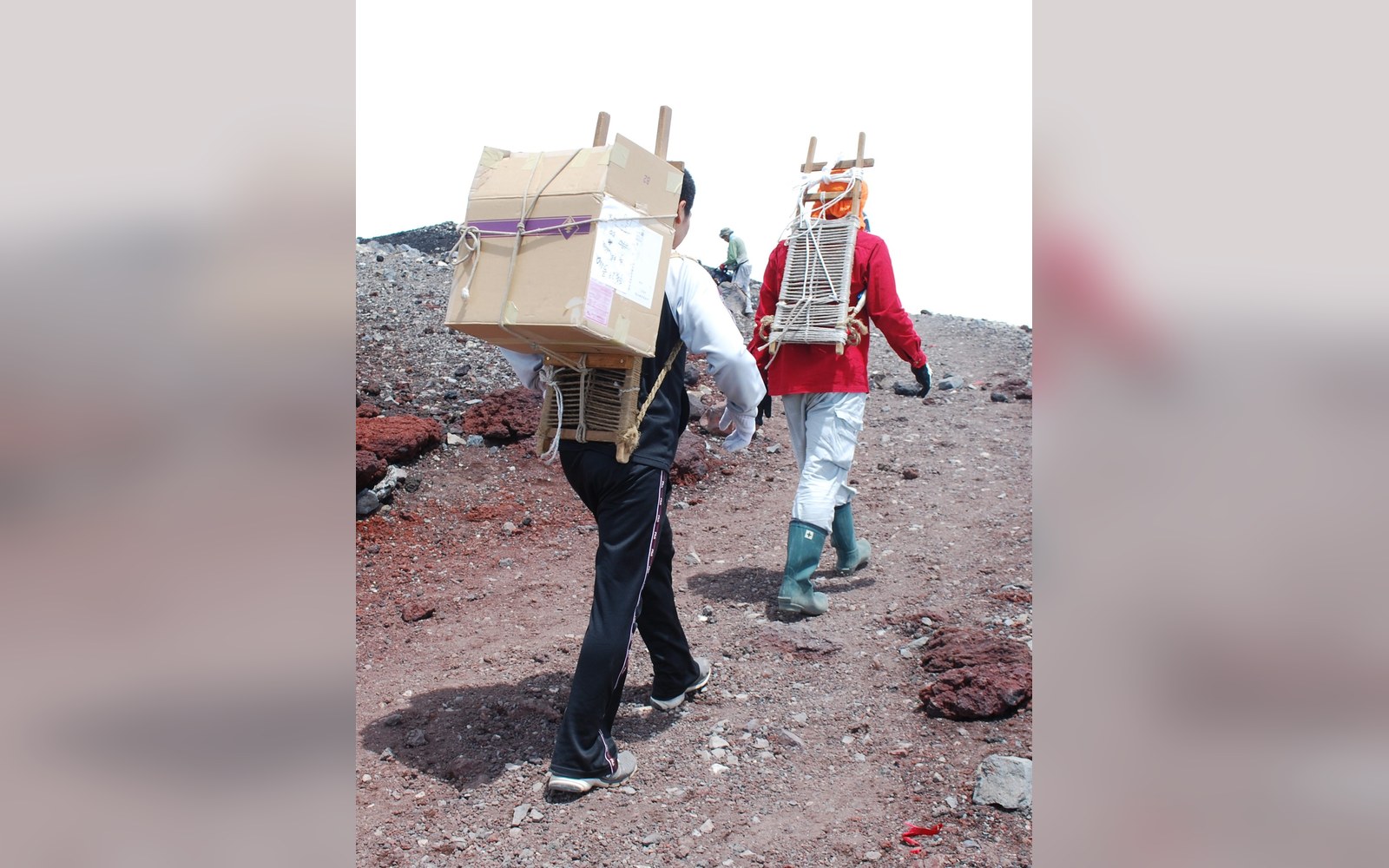
Walk into any outdoor museum with a camping collection and the 1970s frame pack stops you cold. It is not just big; it is architecturally heavy before a single item goes inside. A typical external-frame pack of that era — a Kelty, a Jansport, a Camp Trails — was built around a welded aluminium ladder frame, with a nylon or canvas bag lashed to it by clevis pins and wing-bolt adjusters. The empty frame and bag together commonly ran between 1.8 and 2.5 kilograms. Add a sleeping bag rated to mountain temperatures (down, but sewn into a cotton shell, or the cheaper synthetic fill that weighed considerably more), a canvas or duck-cloth tent with steel or aluminium poles, a cotton-drill stuff sack of clothing, a steel cookset, a full-size axe or hatchet that many guides of the period still recommended, and the Sears catalogue of 1976 listed a representative "complete backpacking outfit" at figures that placed total base weight — carried gear minus food and water — routinely between 16 and 22 kilograms for a three-season trip.
That is not a boutique outlier. Survey the gear lists published in books like Colin Fletcher's The Complete Walker (first edition 1968, revised 1974) or Harvey Manning's Backpacking: One Step at a Time (1972), and similar figures appear consistently. Fletcher himself carried a base weight well above fifteen kilograms on his celebrated Grand Canyon traverse, and he was considered methodical, even finicky, about weight. Manning's tables are blunter: he lists "minimum comfortable loads" for a week's trip that would exceed 18 kilograms for most readers, and he treats this as unremarkable. Both books assume that a good day's walking in the backcountry covers perhaps 12 to 18 kilometres; both assume rest days are built in because the body demands them.
The cotton problem sat at the heart of it. Cotton feels pleasant in a shop, but it absorbs roughly 27 times its own weight in water before it begins to transmit moisture, and wet cotton holds that load. Shirts, trousers, sleeping-bag liners and tent inners in cotton added dead weight that could not be sweated out at camp the way synthetic materials later could. Wool was warmer wet but heavier dry. The materials science had not yet delivered what polyester fleece (introduced commercially by Malden Mills in the late 1970s as Polarfleece) and coated nylon eventually would; the fibres available to a 1970s backpacker were broadly the same fibres available since the Second World War.
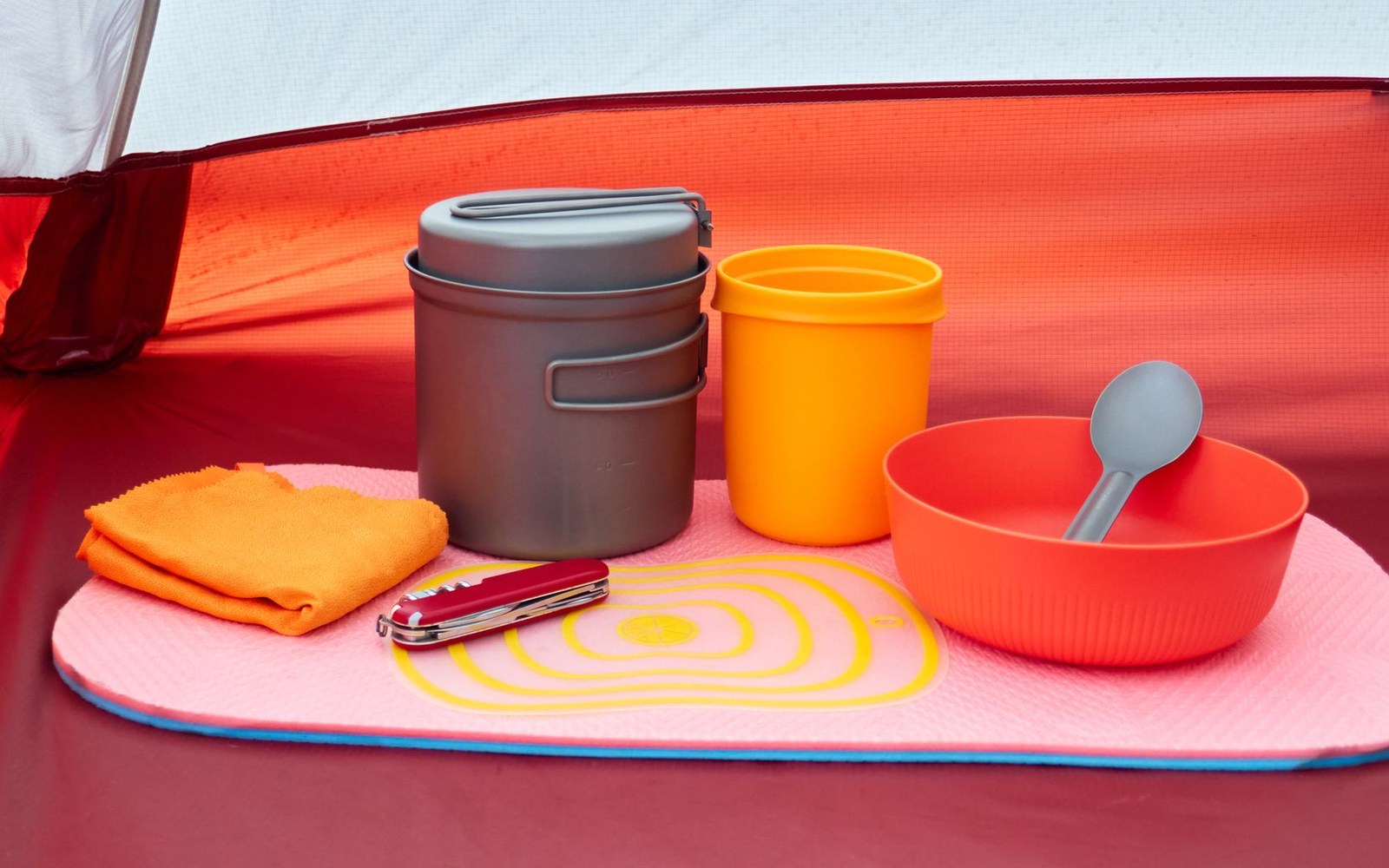
An ultralight cook kit laid out in a tent. Discussed in One walker's argument cut the load by three quarters.
Photo: Mykhailo Petrushchak / Pexels
Why the Trails Absorbed It
What is striking in retrospect is how thoroughly the long-trail culture of the 1970s simply accepted the weight. The Appalachian Trail Conservancy's planning documents of the era sized resupply intervals and shelter spacing around the expectation that hikers would cover ground slowly. The shelters — three-sided Adirondack-style lean-tos spaced at intervals along the AT — were positioned for parties moving 15 to 20 kilometres a day under load, which is what 20 kilograms allows. Stages on the early thru-hike accounts reflect this: Earl Shaffer's 1948 pace was described by contemporaries as remarkable partly because he moved faster than a loaded pack seemed to permit.
The external frame had one genuine engineering virtue: it held the load away from the back, allowing air circulation and making the weight feel more vertical. A correctly fitted Kelty transferred load efficiently to the hips before hip-belt design was standardised. But "efficiently" is relative. The frames were designed for loads that modern ultralight walkers would regard as structurally inadvisable; they worked because the loads were genuinely that heavy, not because the frames were unnecessarily strong.
The tent situation compounded everything. A typical two-person backpacking tent of the mid-1970s — say, a North Face Oval Intention or a Sierra Designs Starflight — weighed between 2 and 3 kilograms packed, with steel or early aluminium poles and a sewn-in groundsheet. Ground cloths were often added beneath them, contributing another few hundred grams. A solo walker using a smaller tent was still carrying 1.5 to 2 kilograms of shelter. Bivouac bags barely existed as a category; tarpaulins were associated with cowboys and military surplus rather than recreational hiking.

Needle, thread and patching kit.
Photo: Eleonora Vokueva / Pexels
Food added to the reckoning in ways that later freeze-drying changed completely. Dehydrated meals existed — Mountain House launched its first commercial range in 1969 — but the staples many walkers carried were canned goods, hard cheese, dry salami and dense biscuits. A week's food at the caloric density of tinned food could weigh six to eight kilograms before water was considered. The weekly total a hiker left the trailhead with — base weight plus food plus water — regularly exceeded 25 kilograms, and sometimes 30.
Chronology
- 1948Earl Shaffer's AT thru-hike; pace noted as exceptional given load expectations of the era
- 1968Colin Fletcher publishes The Complete Walker (first edition); gear lists reflect 15+ kg base weights as standard
- 1969Mountain House launches first commercial freeze-dried meal range
- 1972Harvey Manning publishes Backpacking: One Step at a Time; comparable load figures throughout
- Late 1970sMalden Mills introduces Polarfleece commercially; first widely available synthetic insulation fabric
- 1992Ray Jardine publishes The PCT Hiker's Handbook; systematic ultralight argument enters public discourse
What Twenty Kilos Made of the Day
The physiological literature on load-carrying is unambiguous: each additional kilogram above roughly 10 percent of body weight progressively increases oxygen consumption, reduces sustainable pace and shortens the endurance ceiling before fatigue accumulates. A 1977 study by the US Army Research Institute, examining load carriage and metabolic cost across different pack weights, showed that moving from a 15-kilogram to a 25-kilogram pack on level ground increased energy expenditure by roughly 15 to 20 percent, with greater penalties on ascent.
Trail culture in the 1970s internalised this not as failure but as character. The ability to carry a heavy pack was itself admired; a guide who arrived at camp with a light rucksack was regarded with mild suspicion rather than respect. The culture of the long trail was, explicitly, a culture of endurance under weight. It produced its own language — "suffer through the miles", "earn the summit" — and its own rituals, including the ceremonial lightening of the load by eating everything possible on day one.
Ray Jardine's systematic challenge to all of this did not arrive until The PCT Hiker's Handbook in 1992, and the broader ultralight movement it seeded took another decade to enter the mainstream. By that point the materials had caught up with the argument: cuben fibre, titanium cookware and closed-cell foam were already displacing steel, cotton and canvas. What Jardine's approach revealed was not that the 1970s walker was careless, but that the pack weight had never been examined as a variable — it had been treated as weather, something that arrived and had to be endured rather than something that could be engineered away.
The twenty-kilo load shaped an entire generation of trail design, shelter placement and long-distance culture. Understanding it is understanding why the trails are spaced the way they are.
The Appalachian Trail Conservancy's planning documents of the era sized resupply intervals and shelter spacing around the expectation that hikers would cover ground slowly.
A technical woven fabric at macro range. Discussed in A fabric that changed what a pack could be.
Photo: Matheus Bertelli / Pexels
Representative weights (1970s era)
More in Twenty kilos to five