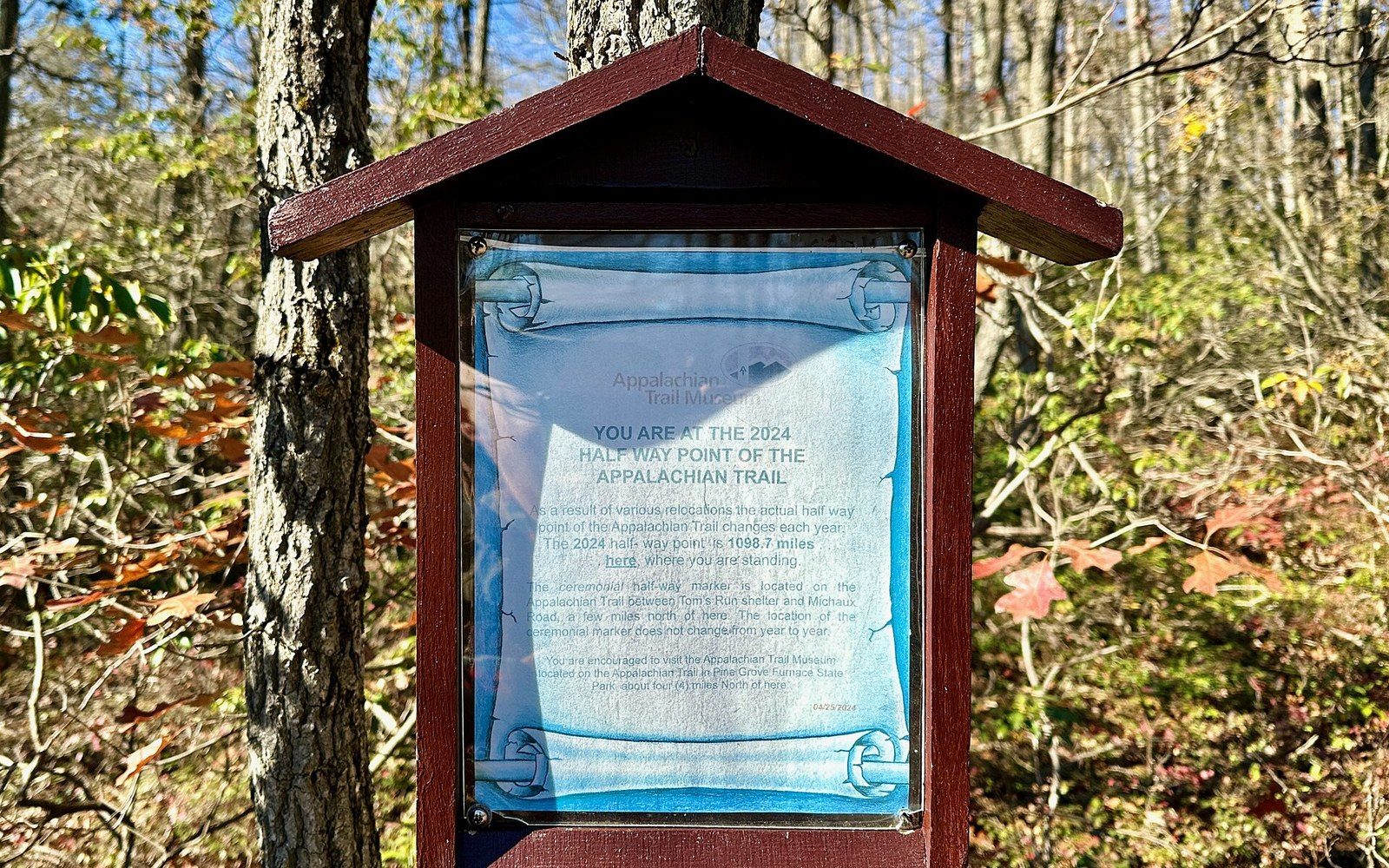
The evidence on the table
A trail register is a notebook, usually weatherproof and housed in a box at a shelter or trailhead, where walkers sign their name and date. On the Appalachian Trail, registers have accumulated since the 1930s, and for decades they were the primary verification tool for any claimed end-to-end walk. Earl Shaffer's 1948 thru-hike — the first reported continuous end-to-end of the AT — was authenticated partly through his register signatures and the photographs he carried, reviewed by Appalachian Trail Conservancy staff at the time.
Photographs supplied the second pillar. A walker attempting a speed record would document trailhead signs, shelter registers and distinctive landmarks at the start and finish, plus intermediate points. The problem is obvious in retrospect: photographs prove presence at a location, not continuous movement between locations. They are necessary evidence, but they are not sufficient on their own.
Witness testimony fills some of the gap. Support crews — legal on some trails, not on others — can attest to daily start and finish points. On unsupported attempts, where no crew is permitted, witnesses are rarer and less systematic: a ranger encountered at a pass, a hiker who shares a shelter and signs a register alongside the record-setter.
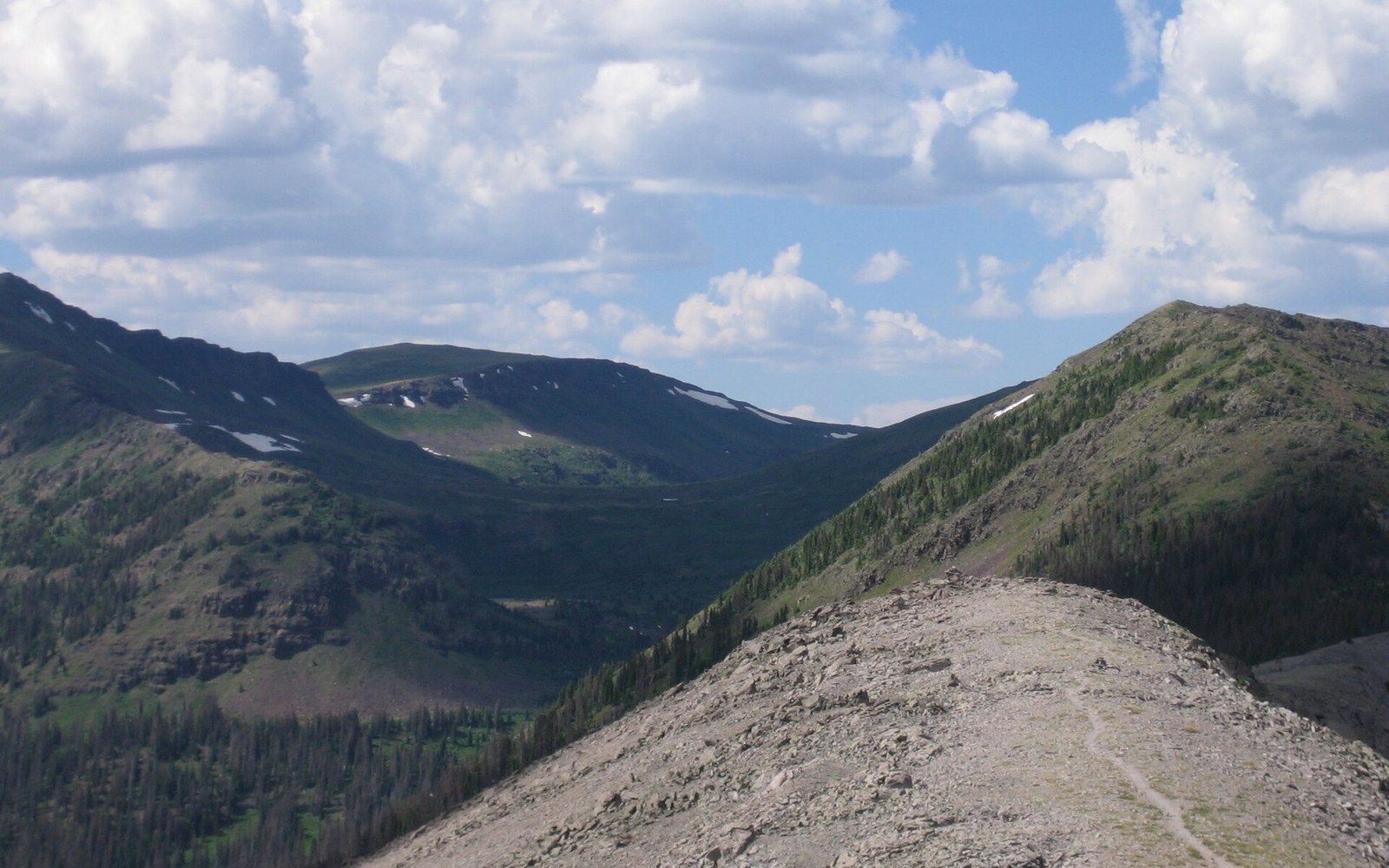
The Continental Divide Trail in the Weminuche Wilderness, Colorado. Discussed in The first reported end-to-end walk, in 1948.
Photo: Continental divide trail in Weminuche Wilderness · Wikimedia Commons
Convention, not authority
What makes trail records structurally different from, say, a marathon time is that no sanctioning body governs them. The Appalachian Trail Conservancy manages the trail's physical infrastructure and its hiker database, but it does not adjudicate records. The Pacific Crest Trail Association takes the same position on the PCT. There is no body analogous to World Athletics, no standardised evidence checklist, no appeals process.
The standards that do exist are community conventions, assembled gradually and held informally. The trail-running and long-distance walking communities have broadly settled on three categories: supported (crew and resupply), self-supported (resupply from caches or shops, no crew), and unsupported (everything carried from the start). Each category demands different evidence because each carries different risks of undocumented assistance. An unsupported attempt that relies solely on witness testimony from a travelling crew member is not credible within that framework, because the framework itself exists to distinguish the categories.
Fastest Known Time, the database that has become the de facto registry for trail speed records across hundreds of routes worldwide, publishes its own verification guidelines and requires submission of a GPS track, photographs and a written account. Crucially, it describes its process as a community review rather than official certification — and it says so plainly. The record goes into the database when the evidence is judged sufficient by the site's reviewers; it can be disputed and re-examined. That is as close to a formal process as trail records currently have, and it is voluntary.
How verification works: a hierarchy
- Trail register signatures
- place and date, but not movement between
- Photographs at named landmarks
- presence confirmed, continuity not
- Witness testimony
- strongest when independent; weakest from a support crew
- GPS track file
- timestamps and elevation profile; cross-checked against known terrain
- Submitted written account
- narrative that must cohere with all other data
What GPS changed
Consumer GPS devices capable of logging continuous tracks became widely available through the 2000s, and by the 2010s a submitted GPS track had become an expected component of any serious record attempt. A track file shows not just waypoints but movement between them: speed, elevation profile, timestamps. It is much harder to fabricate convincingly than a set of photographs, though not impossible.
The limitation of GPS data is that a device can be carried by someone else, or run from a vehicle on a road parallel to a trail. Anomalous speed spikes, impossibly flat elevation profiles and gaps in the record are the flags reviewers look for. Paired with photographs at specific waypoints and consistent witness accounts, a clean GPS track is now the closest thing the community has to reliable verification.
The result is a system that works reasonably well for good-faith attempts and breaks down for contested ones — which is exactly what you would expect from a structure built on convention rather than authority. Whether that is a flaw or simply the correct scale of governance for a pastime conducted mostly alone in the mountains is a question the community has not resolved, and may never need to.
Paired with photographs at specific waypoints and consistent witness accounts, a clean GPS track is now the closest thing the community has to reliable verification.
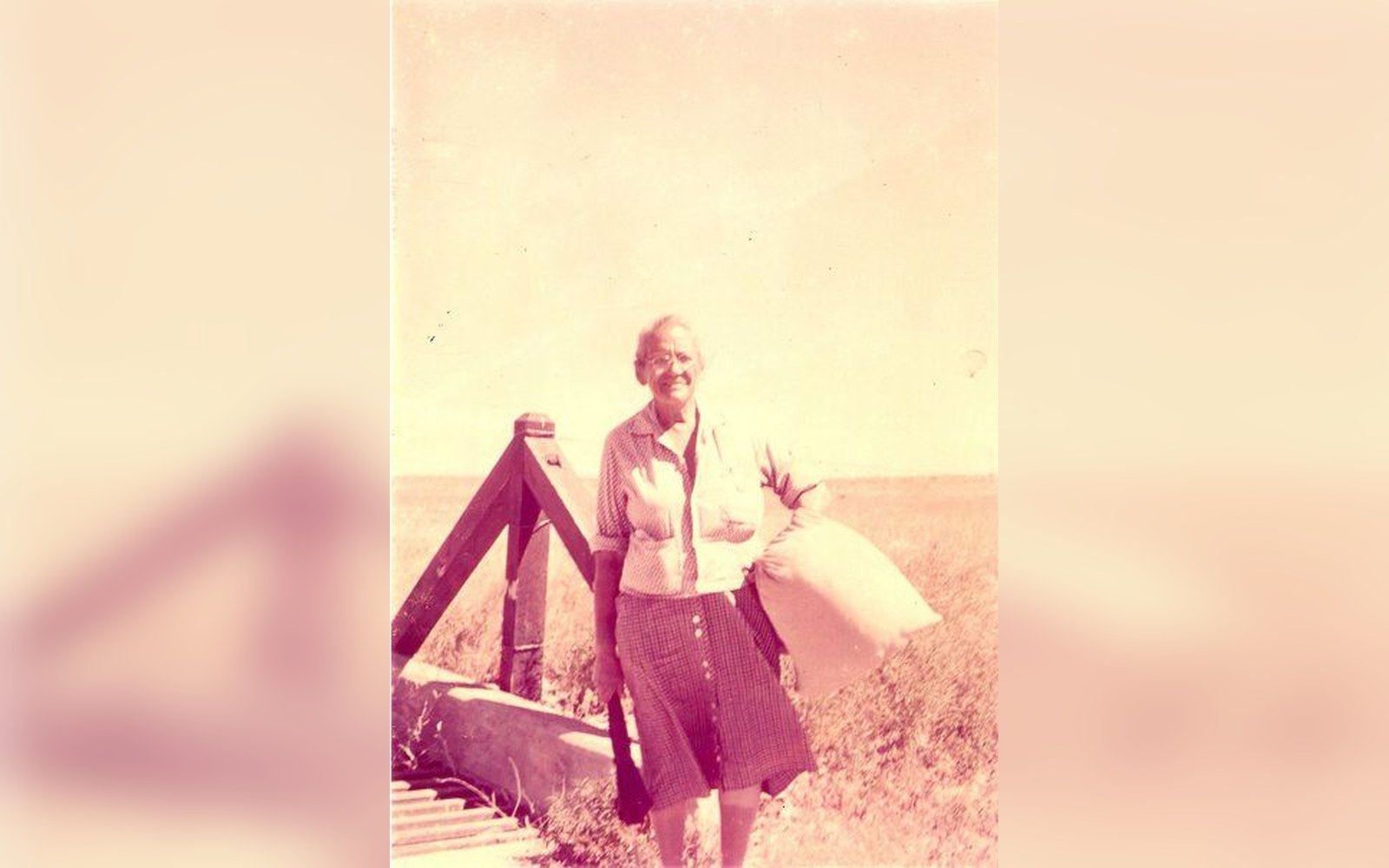
Emma Gatewood with her homemade sack. Discussed in A woman walked it in 1955 in canvas shoes.
Photo: Emma Gatewood 424x604 · Wikimedia Commons
The three attempt categories
- Supported
- crew permitted, resupply assistance permitted
- Self-supported
- resupply from shops or pre-placed caches; no travelling crew
- Unsupported
- everything carried from start; no external assistance
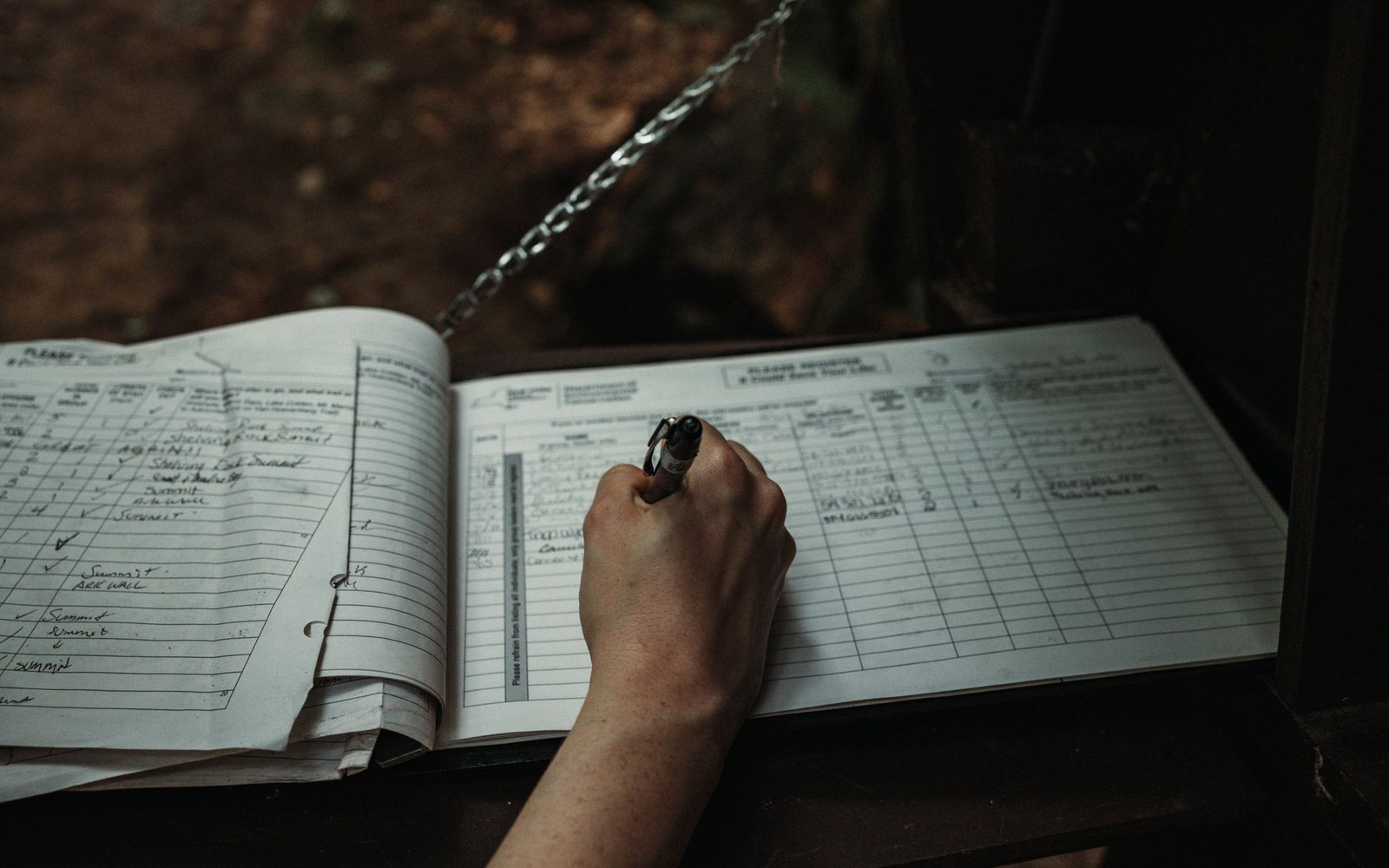
A trail register open on a shelter table.
Photo: Connor Scott McManus / Pexels
More in First walks and counted ones